Dry Storage in Riyadh: A Practical 2026 Guide for Growing Businesses
Choosing the right warehouse starts with understanding your product. If your goods need a stable, moisture-free environment, dry storage in Riyadh is usually the most cost-effective answer. From packaged food and textiles to electronics components and paper stock, dry warehousing keeps inventory safe without the running costs of refrigeration. This 2026 guide explains how it works, what to look for, and how to avoid the mistakes that quietly eat into margins.
Riyadh has grown into the logistics heart of the Kingdom, and demand for organised, climate-aware warehousing has followed. Getting the basics right early saves you from expensive relocations later.
What Dry Storage in Riyadh Actually Means
Dry storage keeps goods at ambient temperature with controlled humidity and good airflow. Unlike cold storage, there is no mechanical cooling, so energy use stays low. The focus instead is on keeping products dry, pest-free, and off the floor.
In a climate like Riyadh’s, humidity spikes and summer heat can still damage sensitive stock. A professional facility manages this with insulation, ventilation, and pallet racking rather than refrigeration. For businesses weighing their options, reliable Dry Storage in Riyadh providers offer racked space, inventory tracking, and flexible contracts that scale with demand.
Products That Suit Dry Warehousing
- Canned, boxed, and shelf-stable food and beverages
- Textiles, apparel, and packaging materials
- Furniture, hardware, and building supplies
- Documents, books, and printed media
- Consumer electronics in sealed packaging
Dry Storage vs Frozen Storage: Which Does Your Stock Need?
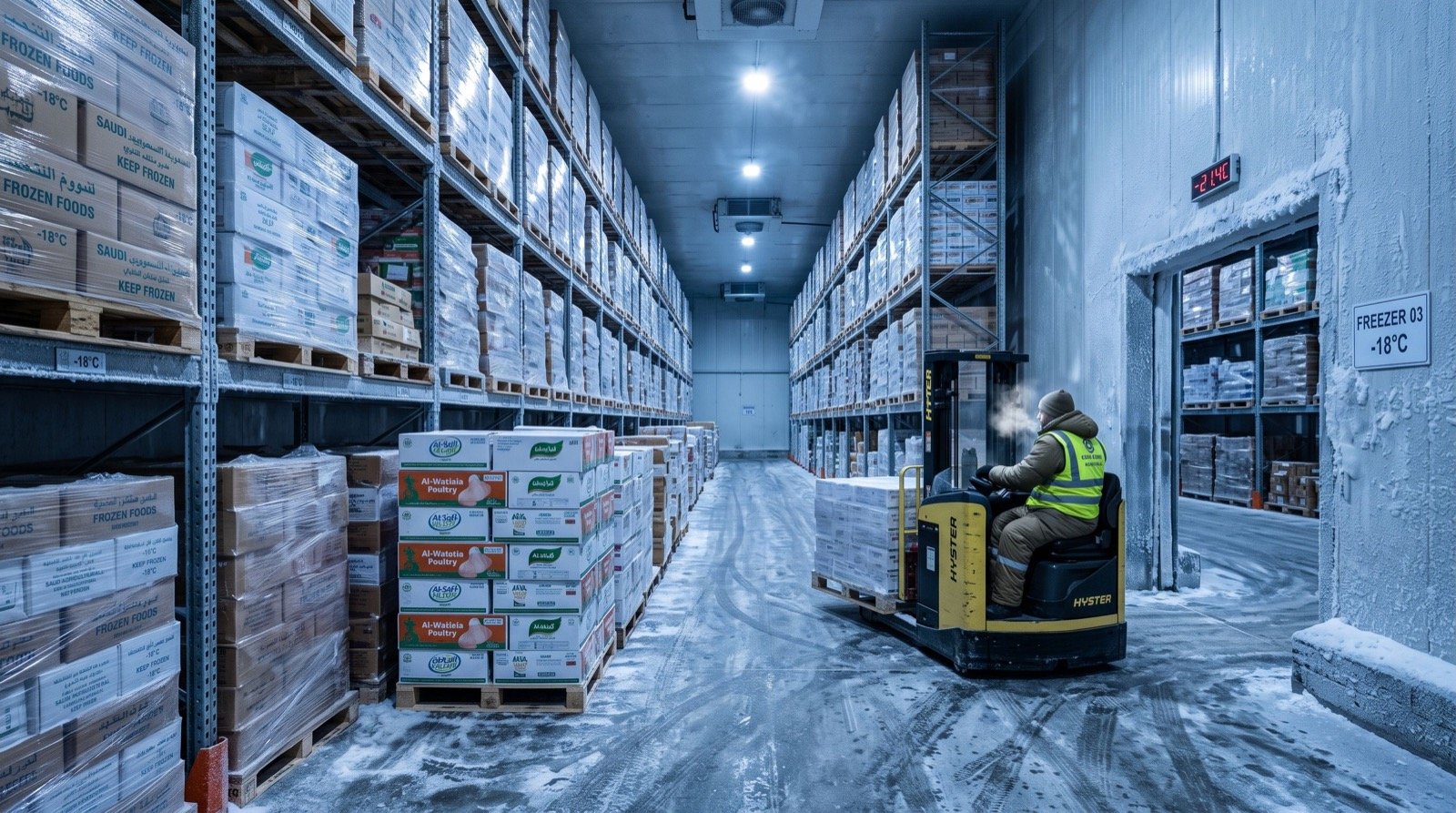
Many businesses carry a mix of products, and mixing storage types incorrectly leads to spoilage or wasted spend. Perishables that must stay below freezing clearly belong in a cold facility, while stable goods do not. If part of your range is temperature-sensitive, pairing dry space with dedicated Frozen Storage in Saudi Arabia keeps everything compliant and fresh under one logistics partner.
| Factor | Dry Storage | Frozen Storage |
|---|---|---|
| Typical temperature | 15–25°C ambient | -18°C or below |
| Running cost | Low | High (energy intensive) |
| Best for | Shelf-stable goods | Meat, seafood, frozen meals |
| Main risk managed | Humidity and pests | Temperature deviation |
| Shelf-life impact | Months to years | Extended freezing life |
According to food-safety guidance from the U.S. Food and Drug Administration, dry goods should be kept cool, dry, and clear of walls to limit pest access and moisture migration, which a well-run facility does by design.
How to Choose a Dry Storage Facility
Not all warehouses are equal. Before signing a contract, work through a short evaluation so you compare providers fairly rather than on headline price alone.
- Location and access: Proximity to ring roads and distribution hubs cuts last-mile cost.
- Humidity control: Ask how the facility manages moisture during peak summer.
- Racking and layout: Proper pallet racking protects goods and speeds picking.
- Inventory systems: Barcode or WMS tracking should give you real-time stock visibility.
- Security: Confirm CCTV, access control, and fire suppression are in place.
- Contract flexibility: Seasonal businesses benefit from scalable space.
A Tip From the Warehouse Floor
One practical lesson stands out: label pallets with receive dates and rotate stock on a first-in, first-out basis. Teams that skip this end up with older inventory buried at the back, which matters even for non-perishables like adhesives and batteries that degrade over time. Good facilities build FIFO into their workflow, and the best quality service providers apply that same discipline across every operation they run.
Managing Costs Without Cutting Corners
Dry storage is already economical, but you can stretch value further. Consolidate shipments to reduce handling fees, use vertical racking to pay for footprint rather than floor sprawl, and review your contract quarterly as demand shifts. Avoid over-renting space during slow months by choosing a provider that allows you to flex up and down.
Energy-aware warehousing also matters. Facilities that insulate well and ventilate smartly keep ambient conditions stable without heavy cooling, a point echoed in efficiency guidance from the U.S. Department of Energy. Lower overhead for the facility often translates into more competitive rates for you.
Common Dry Storage Mistakes Riyadh Businesses Make
Even experienced operators slip into avoidable habits. The most frequent problem is storing pallets flush against exterior walls, where heat transfer and condensation are highest. Leaving a ventilation gap keeps airflow moving and moisture away from your cartons.
A second mistake is neglecting pest prevention until there is a visible problem. By then, contamination has often spread. Reputable facilities run scheduled inspections, seal entry points, and keep food-grade goods elevated on racking rather than on the floor.
The third error is poor documentation. Without receive dates and clear SKU labelling, stock rotation collapses and older inventory degrades out of sight. A simple barcode system solves this and pays for itself quickly through reduced write-offs.
Seasonal Planning for Riyadh’s Climate
Riyadh’s summers push ambient temperatures high, so plan inventory levels around the calendar. Many businesses increase stock ahead of peak retail periods and reduce it during the hottest months to limit exposure. Discuss seasonal flexibility with your provider before you sign, because a contract that lets you expand and contract space protects both your goods and your cash flow.
It also helps to schedule deliveries for cooler parts of the day where possible. Reducing the time pallets spend on an open dock in peak heat lowers the thermal shock on packaging and preserves product quality, especially for items like adhesives, cosmetics, and packaged food.
Frequently Asked Questions
Is dry storage suitable for food products?
Yes. Shelf-stable food such as canned goods, grains, and packaged snacks is ideal for dry storage, provided the facility controls humidity and pests. Chilled or frozen items need dedicated cold space instead.
How is humidity controlled in a Riyadh dry warehouse?
Quality facilities use insulation, ventilation, and sometimes dehumidifiers to keep moisture stable through hot, dry summers and occasional humid spells, protecting goods like paper, textiles, and electronics.
Can I switch between dry and frozen storage as needs change?
A full-service logistics partner lets you combine both under one agreement, so seasonal or product-mix changes do not require moving to a new provider.
What does dry storage cost in 2026?
Pricing depends on space, racking, and contract length. Dry storage remains far cheaper than refrigerated options because it avoids energy-intensive cooling, making it the default choice for stable inventory.
Conclusion
Smart warehousing is about matching each product to the right environment. For stable, non-perishable goods, dry storage in Riyadh delivers safety, visibility, and low running costs, while cold options cover the rest of your range. Audit your inventory, compare facilities on the criteria above, and partner with a provider that can grow with you. Ready to protect your stock and streamline logistics in 2026? Reach out to a trusted Riyadh storage specialist today and lock in space before the next seasonal rush.